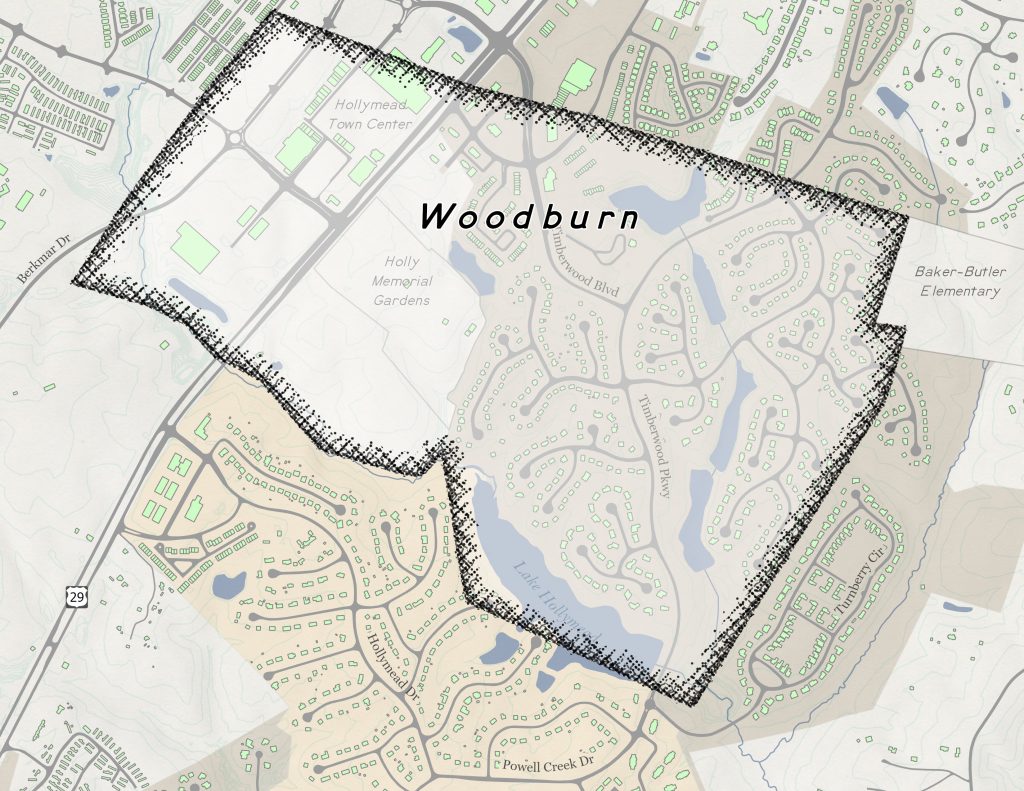
Most of Forest Lakes North was originally part of a farm called “Woodburn” that extended west all the way past Hollymead Town Center. In the mid-1800s it was owned by two families who left a variety of records about their lives in Hollymead.
George Clive
Relatives of Thomas Carr still owned this property in the mid-1800s. Land tax records from 1841 indicate that William G. Carr owned a 438 acre tract adjacent to John Jefferies. Around 1848 there was a property transfer and the tract was given or sold to George Clive, who was married to William’s sister, Patsy Carr.
George Clive was born in Scotland. He was an educator and farmer and it appears he and Patsy made their home on the farm with their childen Mary, William, Emily, Isabella, Eleanor, and George. At the time of the 1850 census George was only six months old and may have been born on the farm.
Documents at the Library of Virginia show that in February 1847, roughly the same time when the family was moving to Woodburn, George Clive purchased two shares in the Rivanna Navigation Company. This organization was founded in 1805 to improve the Rivanna and build infrastructure to support transporting goods along the river. Boats came as far north as Hydraulic Mills (the current South Fork Reservoir), and the company owned a landing adjacent to Rio Mills, not far from the Hollymead area.
The Agriculture Schedule for 1850 indicates that the farm was worth $6,000. Clive owned 6 horses, 11 cows, 4 oxen, 40 sheep, and 30 pigs. He was growing wheat, corn, oats, cotton, potatoes, peas and beans.
The 1850 census slave schedule shows that Clive owned 16 slaves, half of whom were under the age of 11.
A webpage called “Old Homes in the Neighborhood” (now offline but still available at the Internet Archive) shares recollections of Margaret Minor Bryan, a member of the Carr family, who visited the farm during this period:
“When I was a child and young girl, Cousin Patsy Clive lived at Woodburn. Mr. Clive was a teacher so the children did not go to school with us. but were taught at home by their father.”
“Cousin Patsy was Cousin William Carr’s sister, and we were very fond of going to Woodburn and of the Clive cousins.”
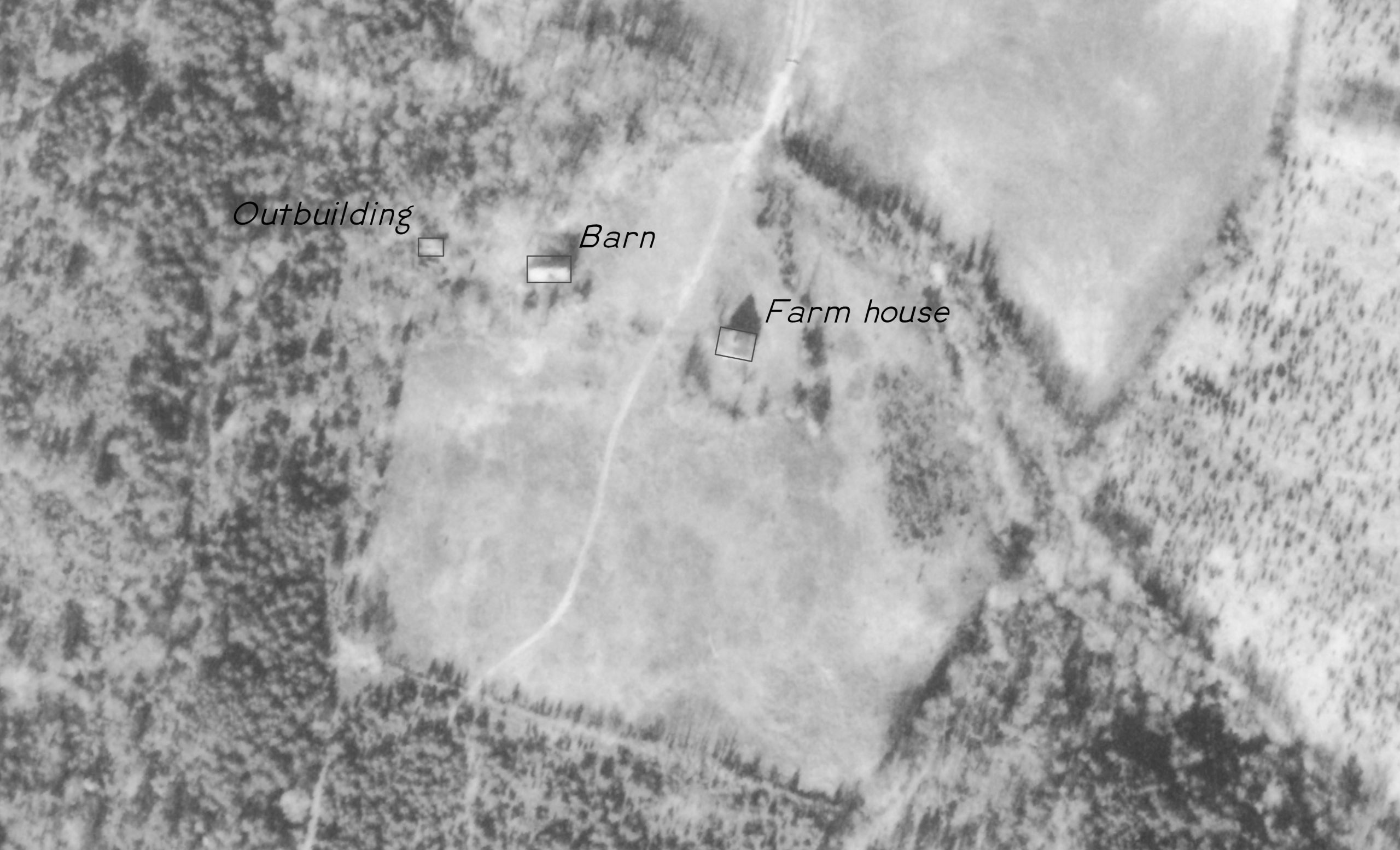
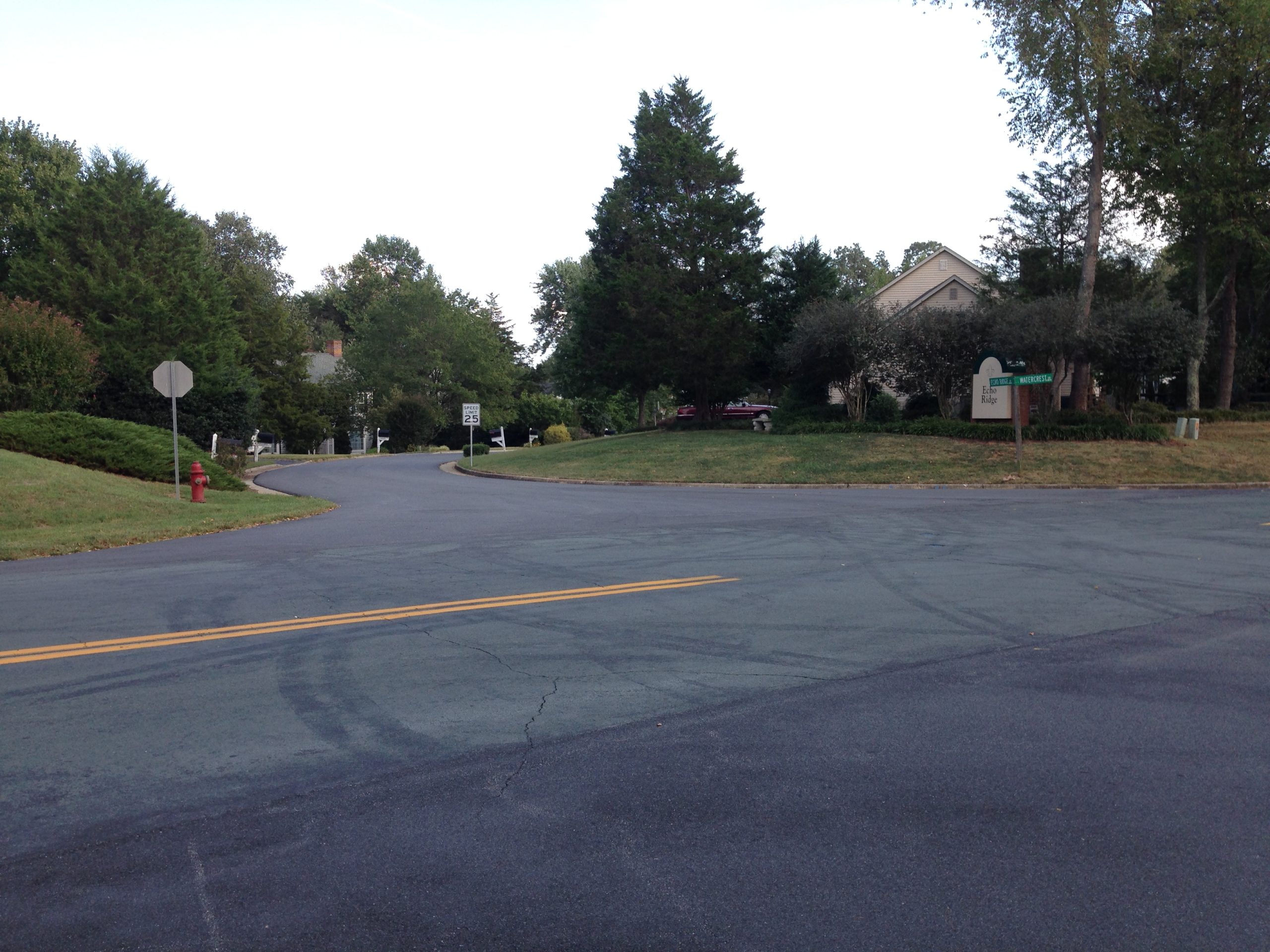
The Woodburn farm house was probably located near the current intersection of Watercrest Drive and Echo Ridge Road in Forest Lakes North, according to historical aerial photos from the University of Virginia. Photos from 1937, 1957, and 1966 show the farm house, a barn, and two outbuildings present. All of these were removed 1974. The slider below allows you to compare the 1966 aerial photo with a modern image.

In March 1854 Clive sold the farm, now described as 471 acres, to Alfred and Martha Wood. The Clives then moved west to Cincinnati and eventually Texas.
A.C. Wood and Family
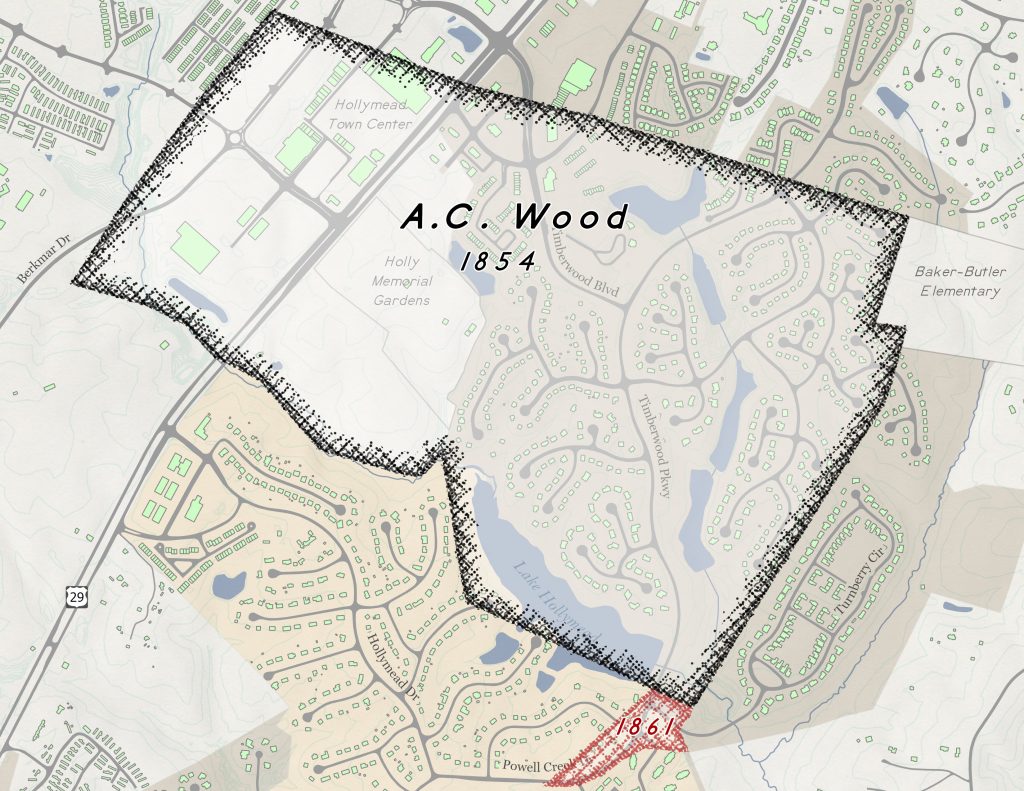
Wood purchased 471 acres in March, 1854 and an additional 7 ¾ acres from William G. Carr in 1861.
Alfred and Martha were both descendants of Thomas Walker, one of the first explorers to cross the Allegheny Mountains and reach Kentucky. Alfred was born in 1822 and was a well-known doctor and farmer in the area. His name appears on an 1864 Civil War era map of Albemarle County.
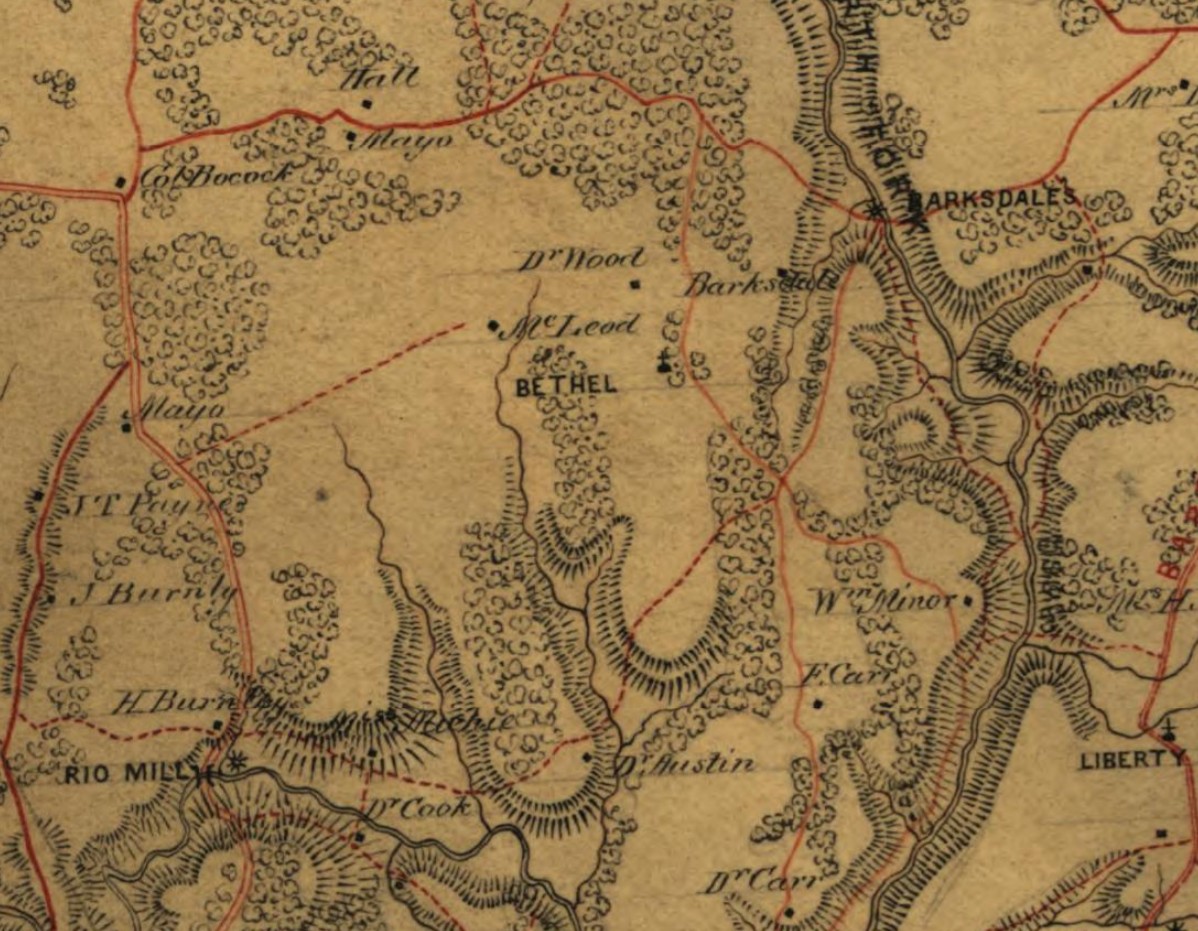
The couple lived at Woodburn with three children, Hunter, James, and Alfred. A daughter, Grace, died at the age of four in 1853 before they moved to Woodburn.
According to the 1860 Census, Wood’s farm was valued at $13,000. He had 9 horses, 6 milk cows, 2 oxen, and 33 pigs. The farm was primarily growing tobacco (15,000 pounds), as well as wheat, Indian corn, oats, and small amounts of peas, potatoes and sweet potatoes. The cows produced 400 lbs of butter.
In June, 1861 Wood was appointed as a road surveyor for a section of public road near Woodburn. This was a common practice and made him responsible for keeping the road “in lawful repair.” That year Wood also slightly added to his property when he purchased an additional 7 ¾ acres from William G. Carr. The reason for this purchase is unclear.
In 1863 Wood amended his will, which called for his land to be sold upon his death and used to provide for his wife and children. In a sign of the political upheaval and economic uncertainty caused by the Civil War, he modified it to say:
“I would not have the land sold in the present state of the country and currency.”

In June 1865, the New York Times carried two stories (1, 2) from the Richmond Bulletin that mention Wood. He was part of a delegation of Albemarle citizens in the early days of Reconstruction that petitioned Governor Pierpoint to hold a state convention to create a new post-war constitution.
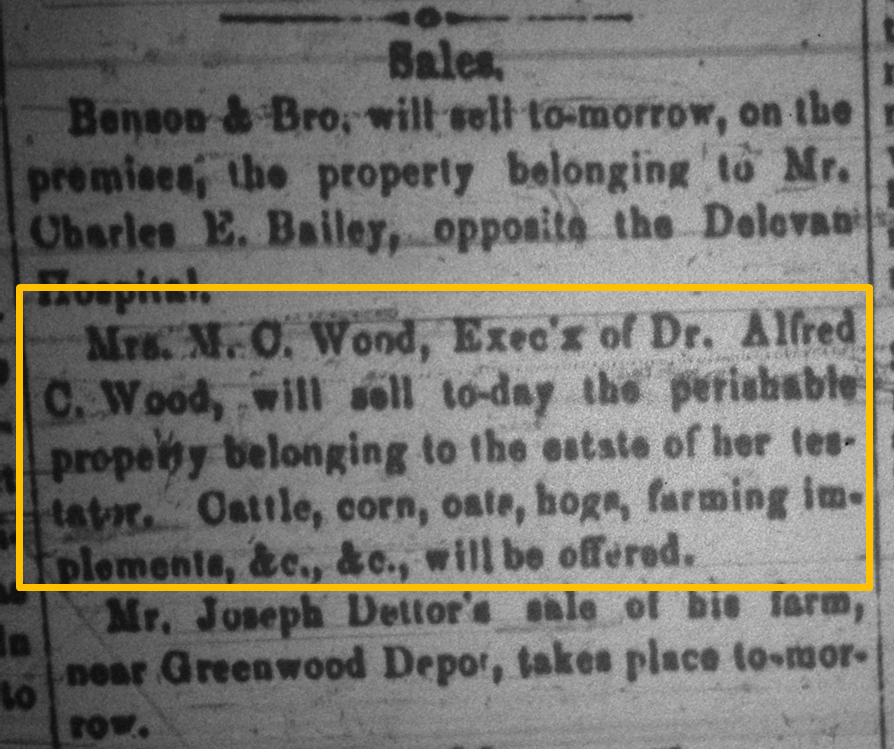
Wood died two months later, in August 1865, of dysentery at the age of 42.
After his death, Wood’s estate was inventoried and the farm implements and animals were sold at an estate sale in December 1865. The listed items offer a glimpse into life on the Woodburn farm. Numerous horses, cows and calves, pork hogs, and sheep were sold. Blacksmith tools and agriculture items such as plows, cultivators, a wheat drill, and a threshing machine are also recorded. Wood also owned a horse drawn buggy and “1 old ox cart”. On the day of the sale, many items were purchased by Wood’s son, Hunter.
Hunter Wood, the oldest son of Alfred and Martha, was born in 1845. He would have been around nine years old when the family moved to Woodburn. At the age of 15 he left to attend the Virginia Military Institute, where he graduated in 1864. He served in the Confederate Army and possibly fought in the Battle of New Market.
After the war, Hunter was paroled and studied law at UVA, where he graduated in 1867. He then moved to Hopkinsville Kentucky with his mother. In his lifetime he became a distinguished attorney and political figure, and helped found a newspaper that is still in print, the Kentucky New Era. His biography is featured in The Corps Forward, Biographical Sketches of the VMI Cadets who Fought in the Battle of New Market, as well as A History of Kentucky and Kentuckians.
It is unclear who lived on the property after Martha and Hunter moved to Kentucky in 1867. An 1875 map by Greene Peyton still labels the farm as belonging to “Dr. A.C. Woods.”
In 1887 George D. Smith bought the property from Martha and her children. This survey was performed at the time:
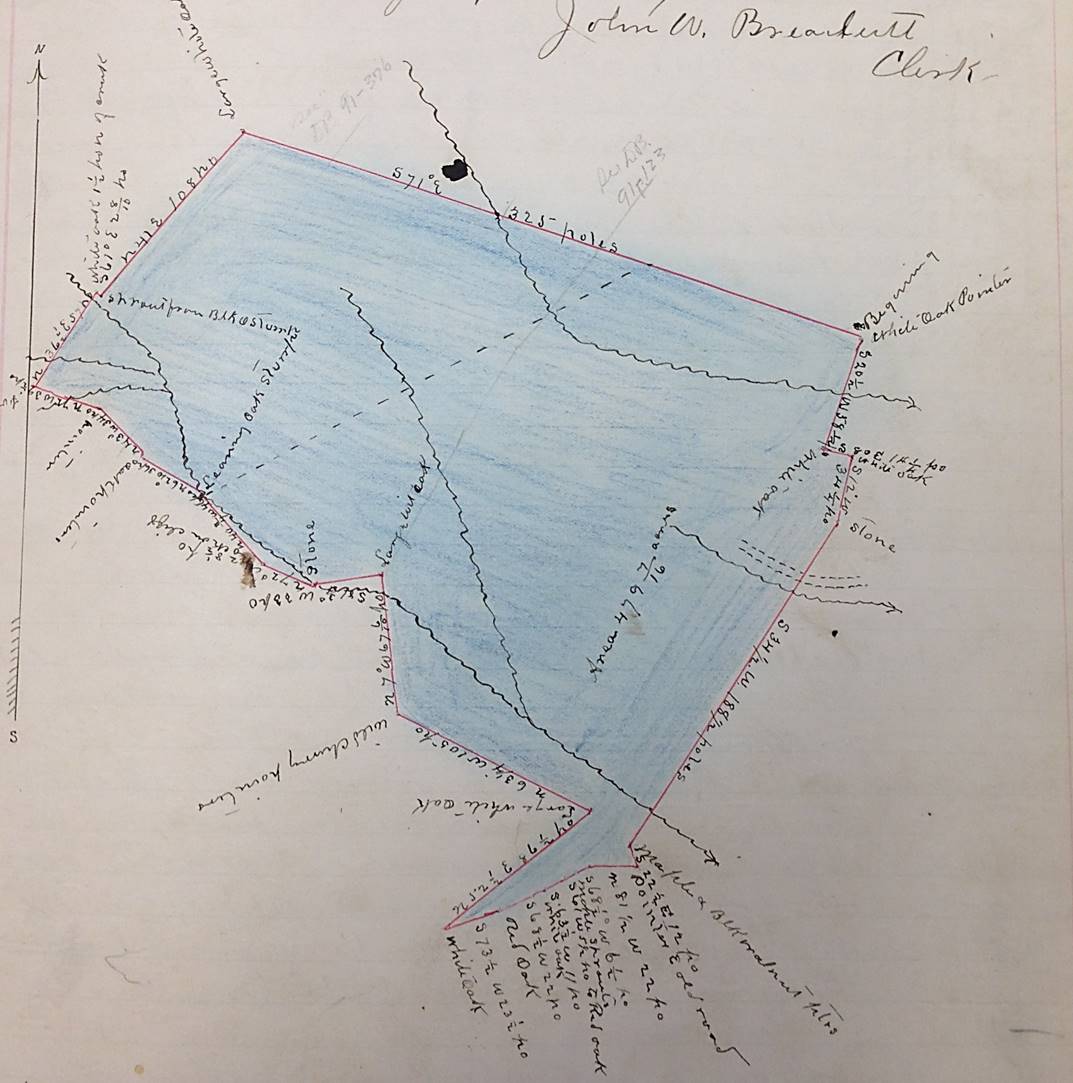
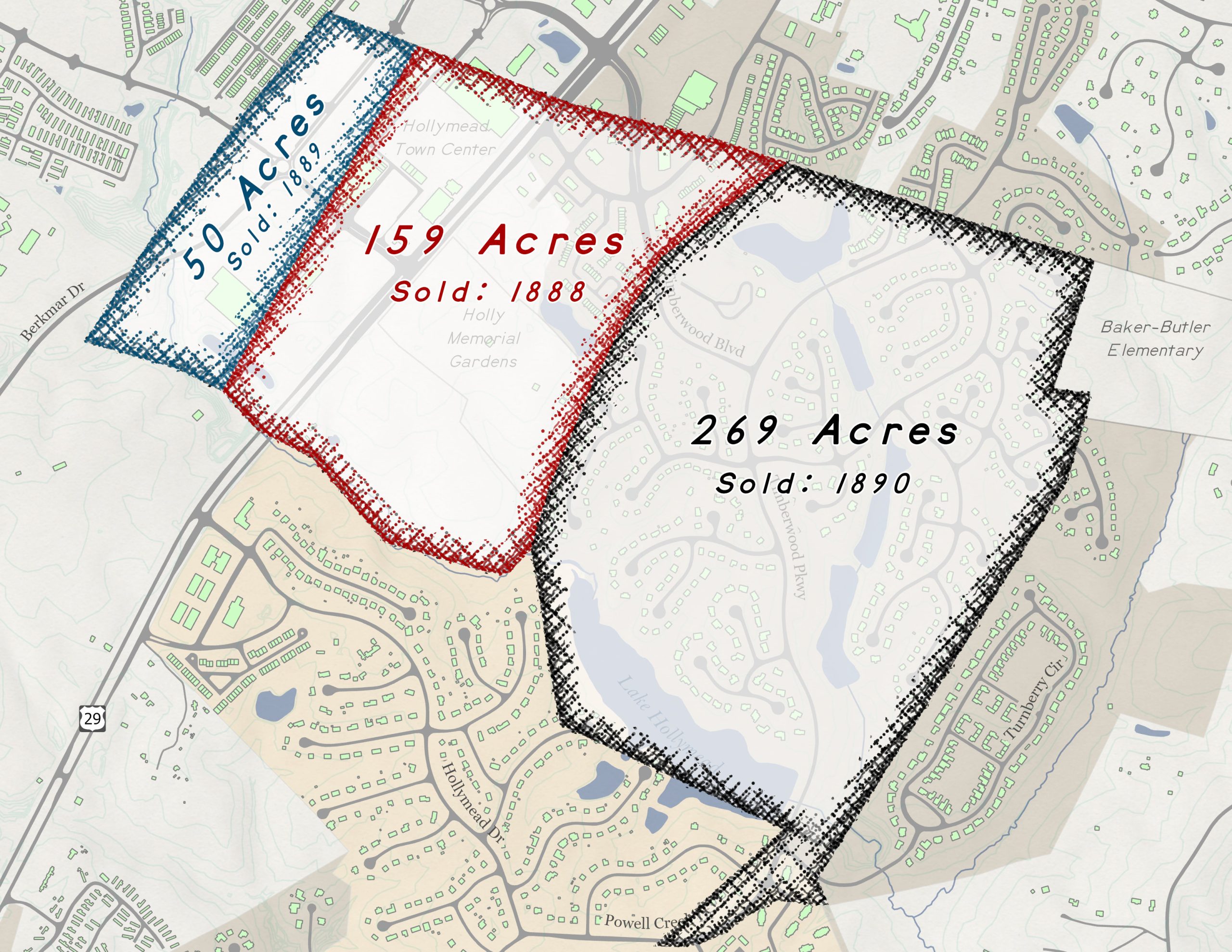
Within two years Smith sold off the portions of Woodburn covering the current Hollymead Town Center and the area encompassing Route 29, Food Lion, Timberwood Grill, and McDonalds. He sold the remaining 269 acres in 1890. This parcel would stay intact until being developed into Forest Lakes north in the 1990s.
Martha Wood passed away in 1906 at her son’s home. Her obituary describes her as “a woman of unusual intelligence and great kindness of heart and a devoted member of the Episcopal church….”
Hunter Wood died in 1920 of pneumonia caused by influenza.