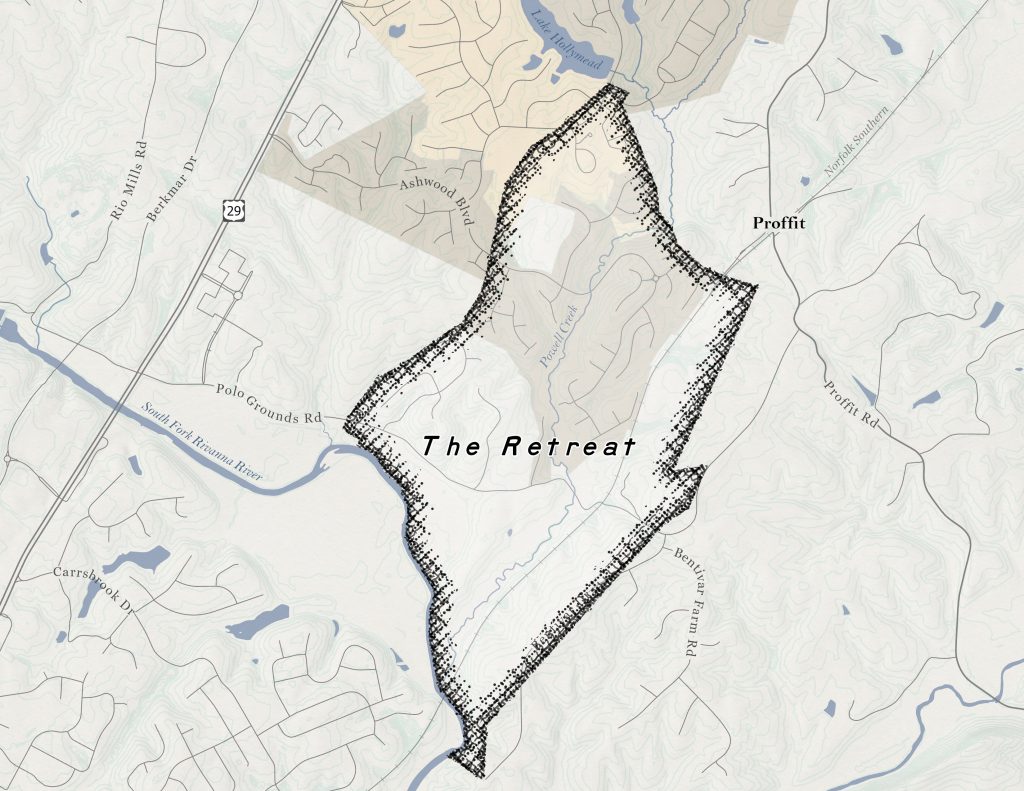
Much of Forest Lakes South was once part of a farm known as “The Retreat.” It had a variety of prominent owners over the years who were all active in County affairs.
Johnathan Boucher Carr
Jonathan Boucher Carr owned this land from 1812 to 1835, where he lived with his wife Barbara and four children, Eleanor, Dabney, Maria, and Frank. In the 1820 census Carr’s household had seven free white persons and 14 enslaved individuals. By 1830 there were ten free white persons and 16 slaves.
Carr was an active member of the Albemarle community. He was a lawyer and held the position of Commonwealth’s Attorney from 1818-1829. He was also a member of several organizations including the Albemarle Agricultural Society and the Albemarle County chapter of the American Colonization Society, where he served as treasurer. The American Colonization Society was a national organization founded to repatriate free blacks to Africa. Carr’s opinions are unclear, but members of the national group had a variety of motivations ranging from a benevolent desire to assist free blacks, to wanting to remove potential challengers to the slavery system.
In 1814 Carr was appointed to the Albemarle Academy Board of Trustees, a group seeking to establish a university in Charlottesville. Although they were not successful in establishing a physical school, their work is often included in histories of the University of Virginia, founded in 1819, as a predecessor organization. Thomas Jefferson was also appointed to the board of Trustees at the same time as Carr.
In 1835 Carr sold the property to John N.C. Stockton and moved his family to Missouri.
John Stockton, Nelson Barksdale, and William Carr
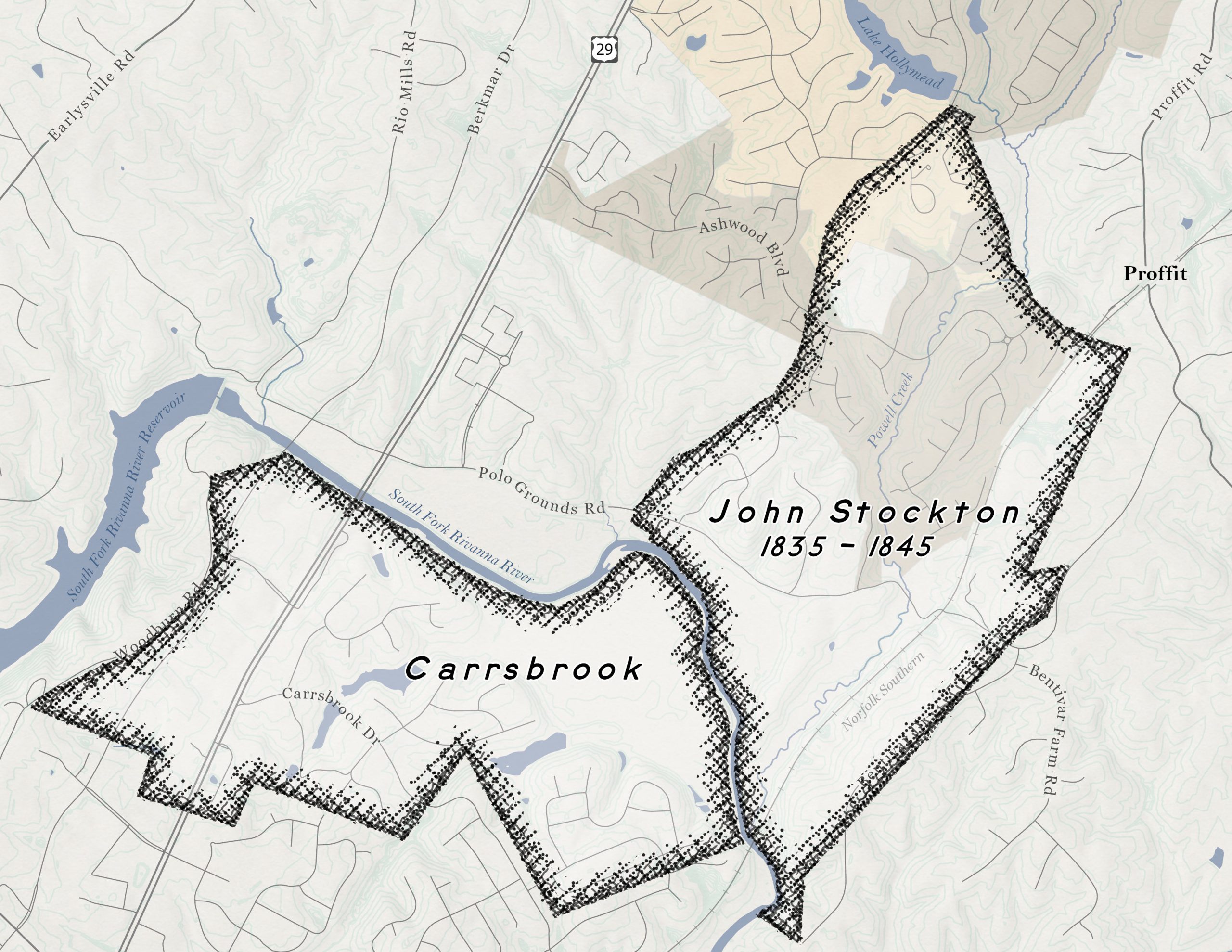
When he made his purchase, Stockton already owned the Carrsbrook estate on the opposite side of the Rivanna River. Stockton was born in New Jersey but his family had deep connections to Albemarle County. He was a businessman who ran a stage coach company with routes centered in Charlottesville. Stockton died on May 25, 1837 when he drowned in Mobile Bay, Alabama.
In 1845 Nelson Barksdale purchased the property, now called “The Retreat”, from Stockton’s estate.
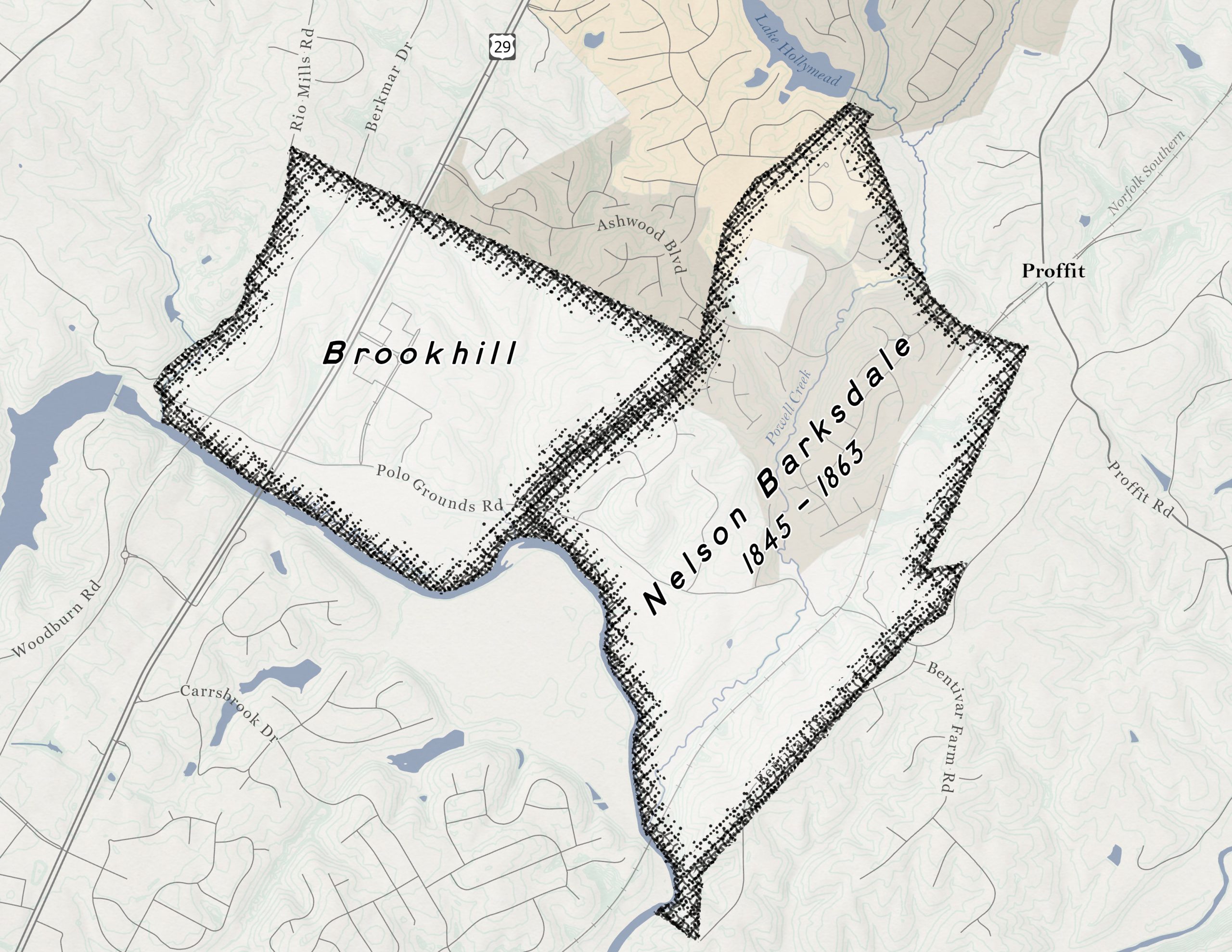
Barksdale was a prominent citizen in Albemarle County. He was involved in the construction of UVA and interacted with Thomas Jefferson. Barksdale also owned a large amount of property. In the 1850 Census he held 1300 acres valued at $33,000. Included in this figure was the Brookhill estate which lies immediately adjacent to Retreat. Because census records aggregate property by the land owner, it is difficult to tell any specific details about how the Retreat tract was being used during this time.
The property was next briefly owned by neighbor William G. Carr in April 1863. Two months later Carr sold the property, minus a portion of land adjacent to his existing estate of Bentivar, to Dr. Henry O. Austin, the son in-law of Nelson Barksdale.
Henry Austin
Austin (often referred to by his initials, “H.O.”) and his children would own this property into the early twentieth century and leave a variety of legal and property records that help explain what life was like in this era.
Prior to Retreat, the Austin’s lived in the Stony Point area. At the time of the 1860 census the household was composed of H.O., his wife Margaret, their daughter Sallie, and an infant son also named H.O. In addition, Austin also owned eleven slaves, eight of whom were children.
In 1861 Austin enlisted in Company E, 19th Virginia Infantry Regiment of the Confederate Army as a Surgeon. It appears that he was discharged in 1862, and records indicate that for most of his enlistment he was on sick leave in Albemarle County.
Following his military service Austin provided goods for the Confederate Army on several occasions. In October 1862 a receipt shows he traded five bushels of salt for 45 lbs of bacon with an Assistant Commissary Sergeant in Gordonsville. In November 1863 he twice sold agricultural products to the Confederate government, including 1800 pounds of hay for $48.60. The next year in December 1864 he again sold hay and other goods to the government.
When the Austins moved to the Hollymead area their daughter Sallie was around ten years old. Their son H.O., present in the 1860 census, likely died sometime before 1870 because he does not appear in later records. A third child, Alexander Campbell, also called A.C. or Campbell, was born around 1869 and grew up on Retreat. It is likely the family also brought their eleven slaves with them as well.
In the agricultural schedule of the 1870 census Austin owned 8 horses, 5 milk cows, 2 oxen, and 15 pigs. He was growing corn and wheat and produced 7,000 lbs of tobacco. By 1880 the farm had 9 horses, 4 oxen, 28 pigs, 40 chickens, and 2 cows that produced 150 pounds of butter. Corn, oats, wheat, and 6,000 pounds of tobacco were grown on the farm.
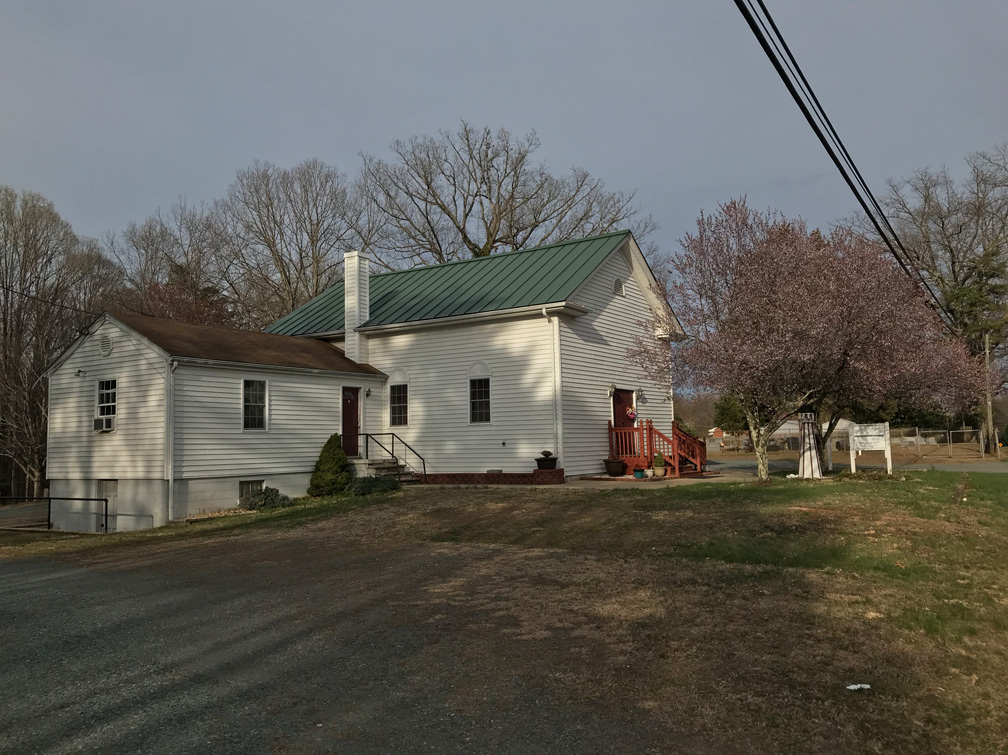
In 1887 Austin helped found Laurel Hill Church, located on Proffit Road. According to a 1955 article in the Daily Progress, the church was originally used by four congregations of different denominations. Dr. H.O. Austin was elected as a trustee representing the Disciples of Christ congregation. Interestingly, one of the founding members of the Disciples of Christ denomination, and the larger Restoration religious movement, was named Alexander Campbell. Perhaps Austin’s son was named after this figure.
In 1891 Austin divided his property and gave large parcels to both of his children. His daughter Sallie and her family received 103 acres, and his son Campbell received 179 acres.
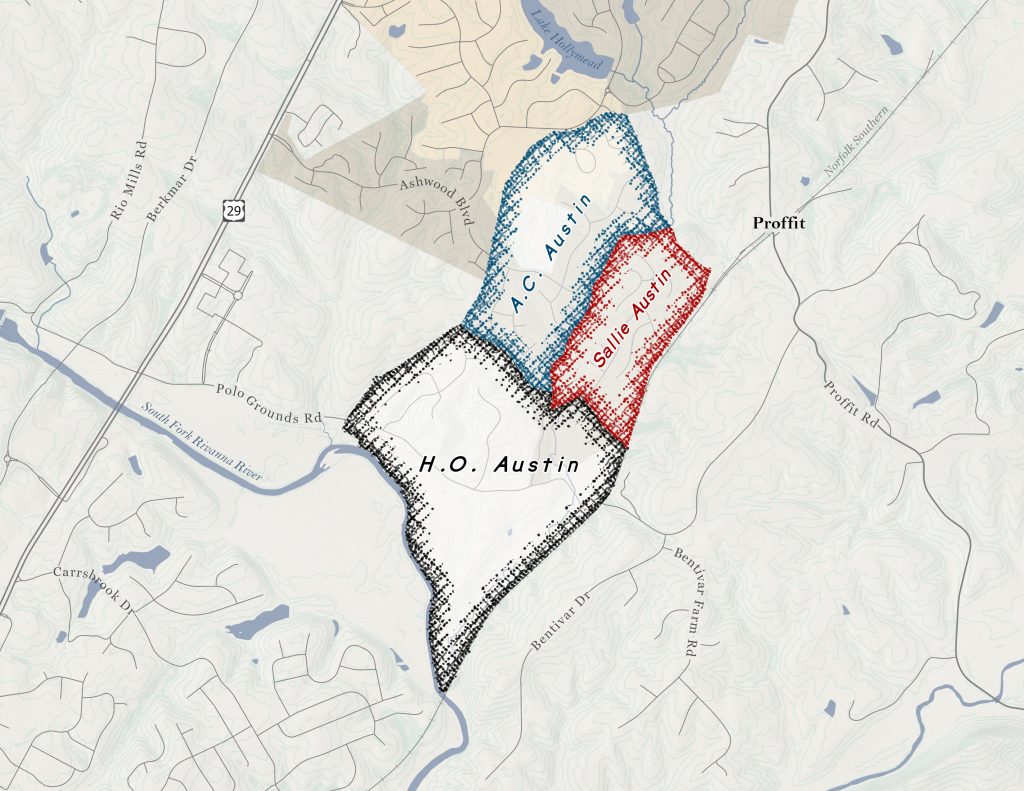
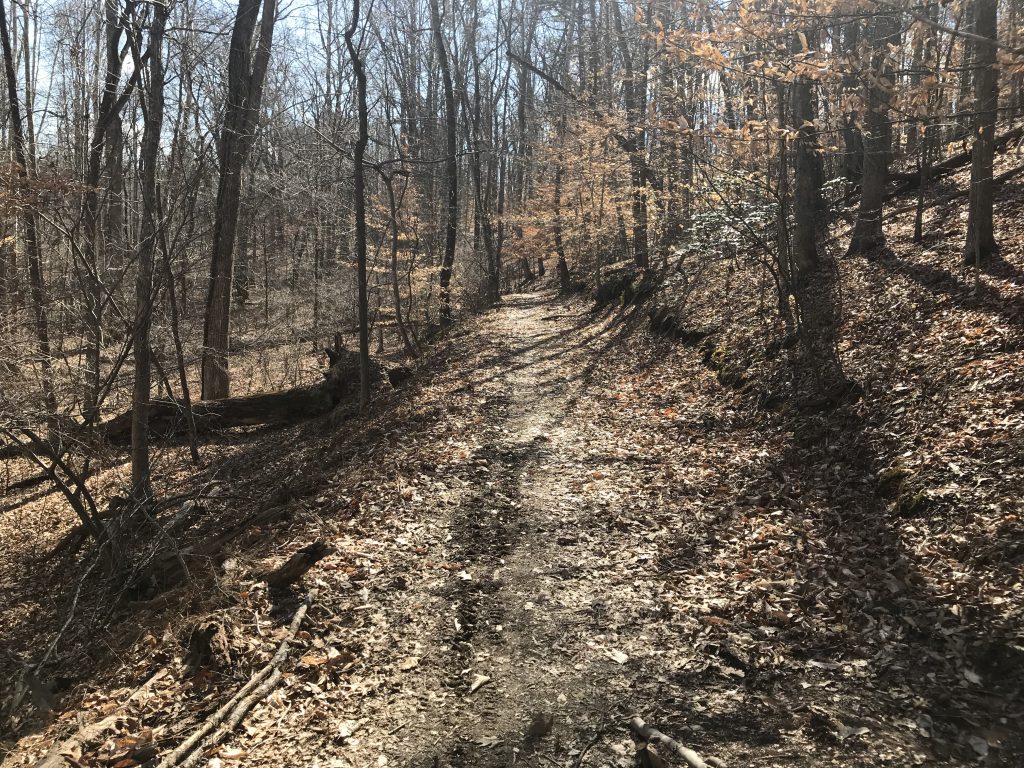
The descriptions of the property recorded in each deed provide a wealth of information about the land, including that a sawmill once existed on Powell Creek and that a section of Forest Lakes trail was once known as “Ice Pond Road” and led to a small pond which was cold enough to provide ice. Today only a remnant of the ice pond is visible, likely the result of drainage infrastructure improvements made when Forest Lakes was established.
Austin’s Wife Margaret died on March 14, 1895. The Charlottesville Chronicle reported,
“The community was greatly shocked this morning by the news of the death of Mrs. Margaret Austin…wife of Dr. H.O. Austin, which occurred last night at twelve o’clock. Her death was so sudden that her children, Mrs. James Austin and Mr. Campbell Austin, did not reach her bedside in time to say goodbye. The internment will take place at Mt. Repose, Sunday at 11 a.m. Much sympathy is expressed for the bereaved husband, who is in very feeble health.”
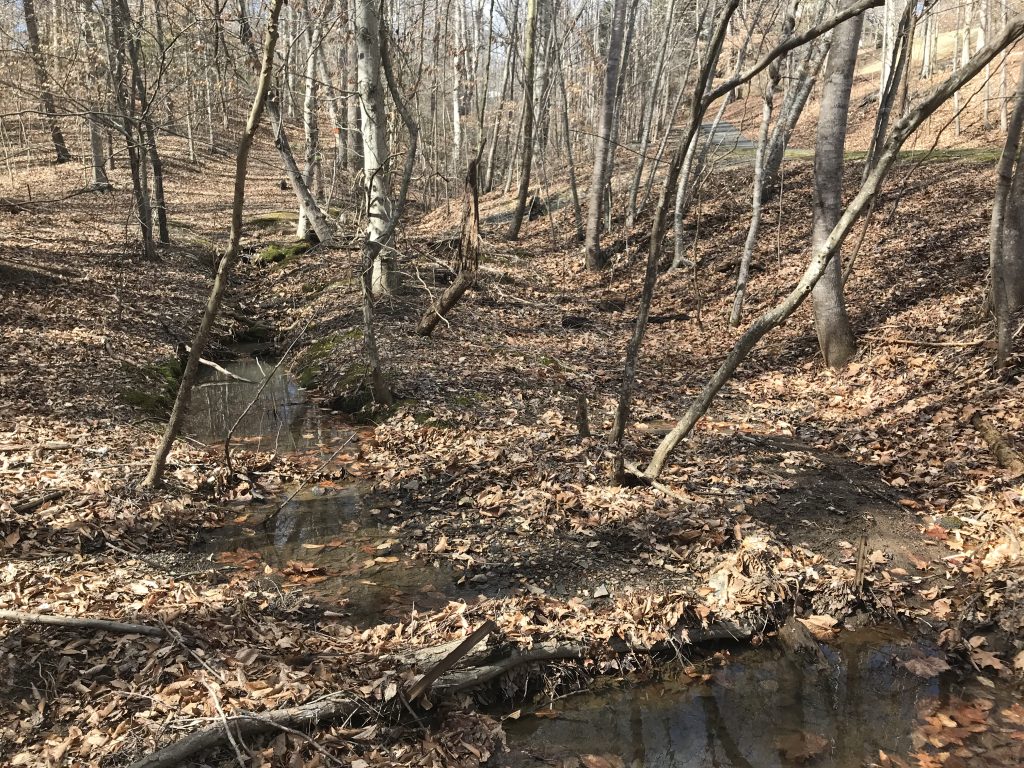
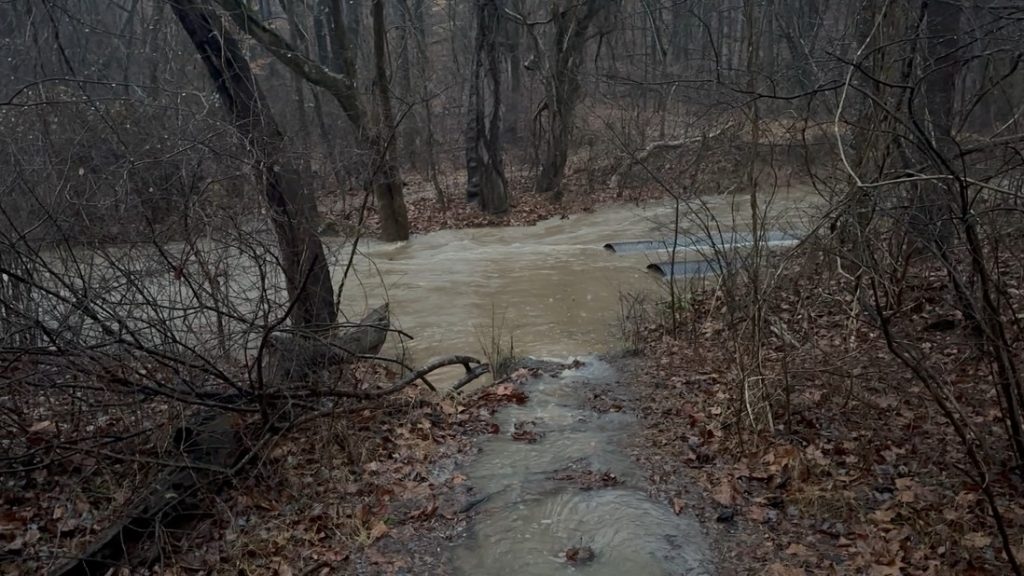
Henry Austin died a few years later around 1898. His Will left all of his property and household goods to Sallie, and his library and watch to Sallie’s son, Henry. The validity of the Will was challenged by Campbell and resulted in a legal case that was eventually settled out-of-court. Testimony from the case explains that the day before Austin died, the creek (likely Powell Creek) which separated his house from Sallie Austin’s house was not fordable. The testimony seems to suggest this prevented Austin’s family from reaching his bedside before he died.
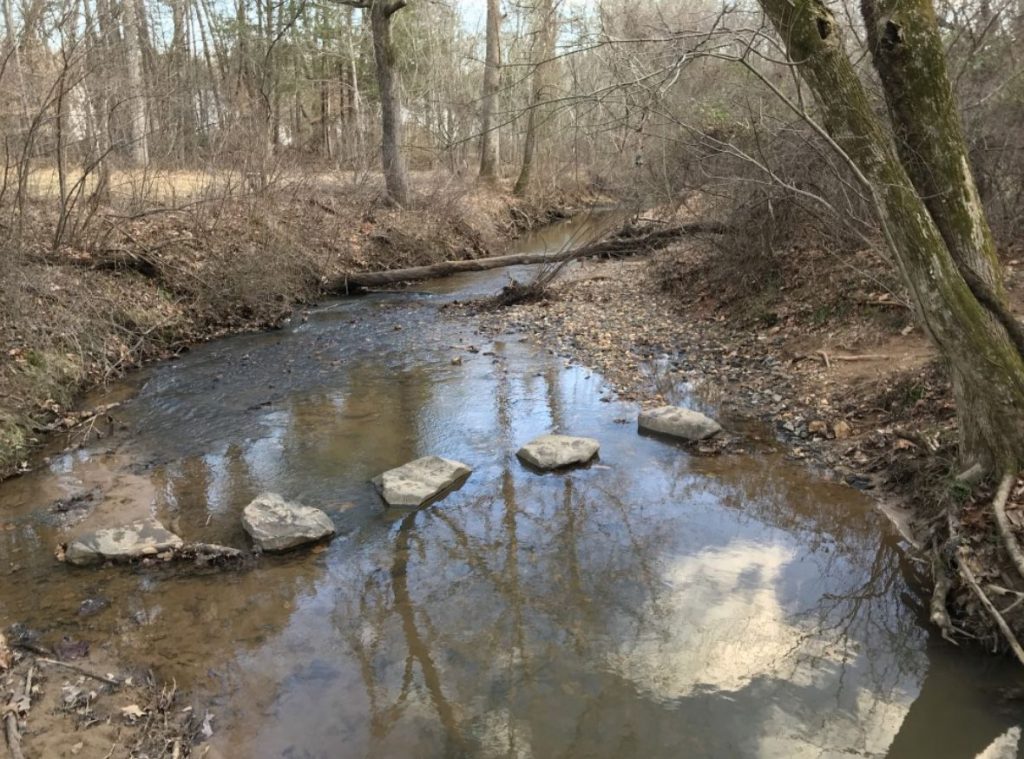
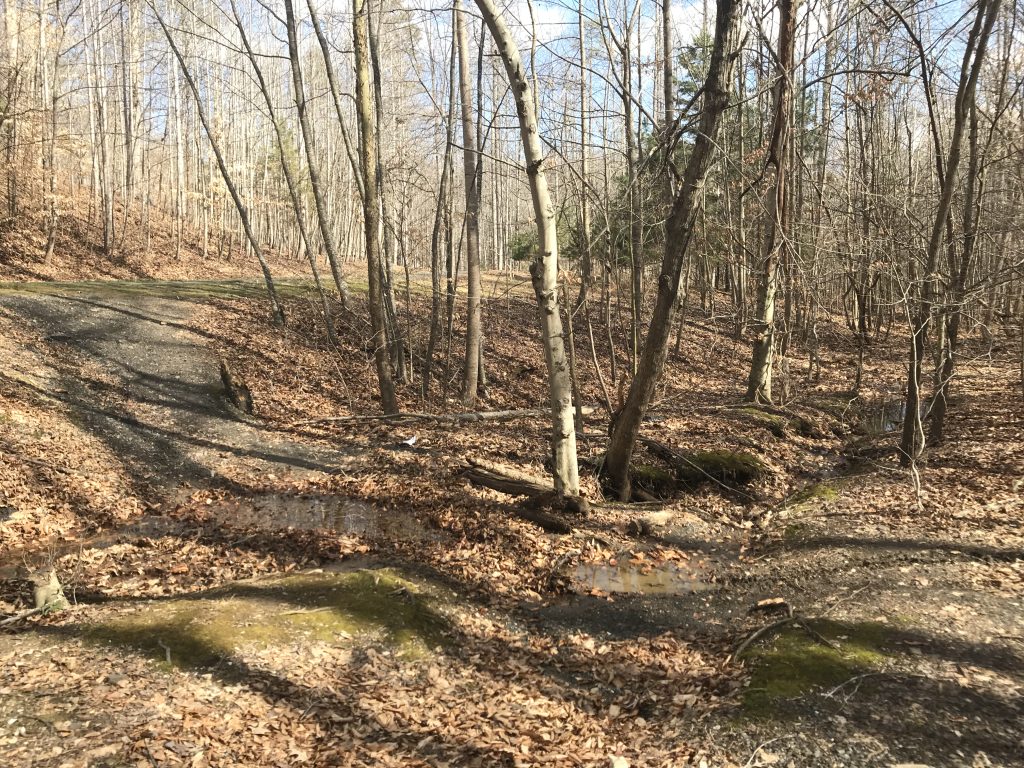
This location on Powell Creek and the old Bethel Station Road is the most direct place to cross between the homes of Dr. and Sallie Austin.
Today it is part of a walking trail, but during heavy storms when the water rises the creek quickly becomes impassable. In 1898 this may have been the location where Dr. Austin’s family desperately tried to reach his daughter to inform her about his impending death.
In the 1900 census both children were living on their respective property. Sallie’s family included her husband, James, three daughters, and two sons. A.C.’s household included his wife and three young children. Shortly after the census, and during the ongoing court case, Campbell sold his property. The parcel would change hands several times over the decades. Eventually most of it would become part of Forest Lakes South, however a small central section near Hollymead Elementary would remain separate from the neighborhood and today is owned by St. Andrew Episcopal Church.
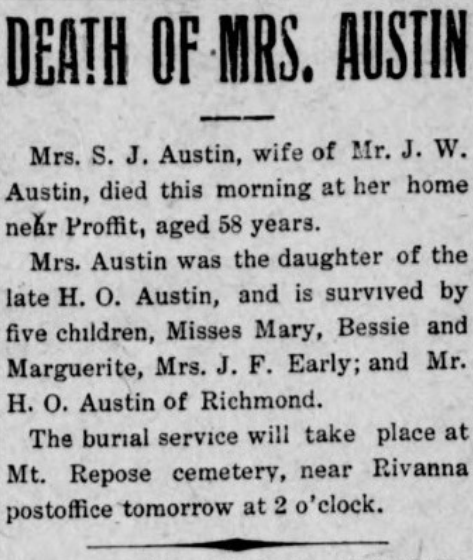
In the following years Sallie’s family moved to her father’s house and in 1908 she sold the tract that would later become Forest Lakes South. When she died in 1911 an announcement in the Daily Progress was prominently featured at the top of the front page.